Published by:
CGP EDU Academic Team
Published on: September 12, 2026
The typical adult human brain has a mass of about 1.4 kg. What force does a full moon exert on such a brain when it is directly above with its center 378000 km away? (Mass of the moon = 7.34 × 10 22 kg)
Text Solution
Verified by ExpertsThe correct answer is:
A
Step 1: Identify the values needed to calculate the gravitational force using Newton's Law of Universal Gravitation. We have:
- Mass of the brain, m = 1.4 kg
- Mass of the moon, M = 7.34 × 10^{22} kg
- Distance, r = 378000 km = 378000 × 10^3 m = 3.78 × 10^{8} m.
Step 2: Use the formula for gravitational force:
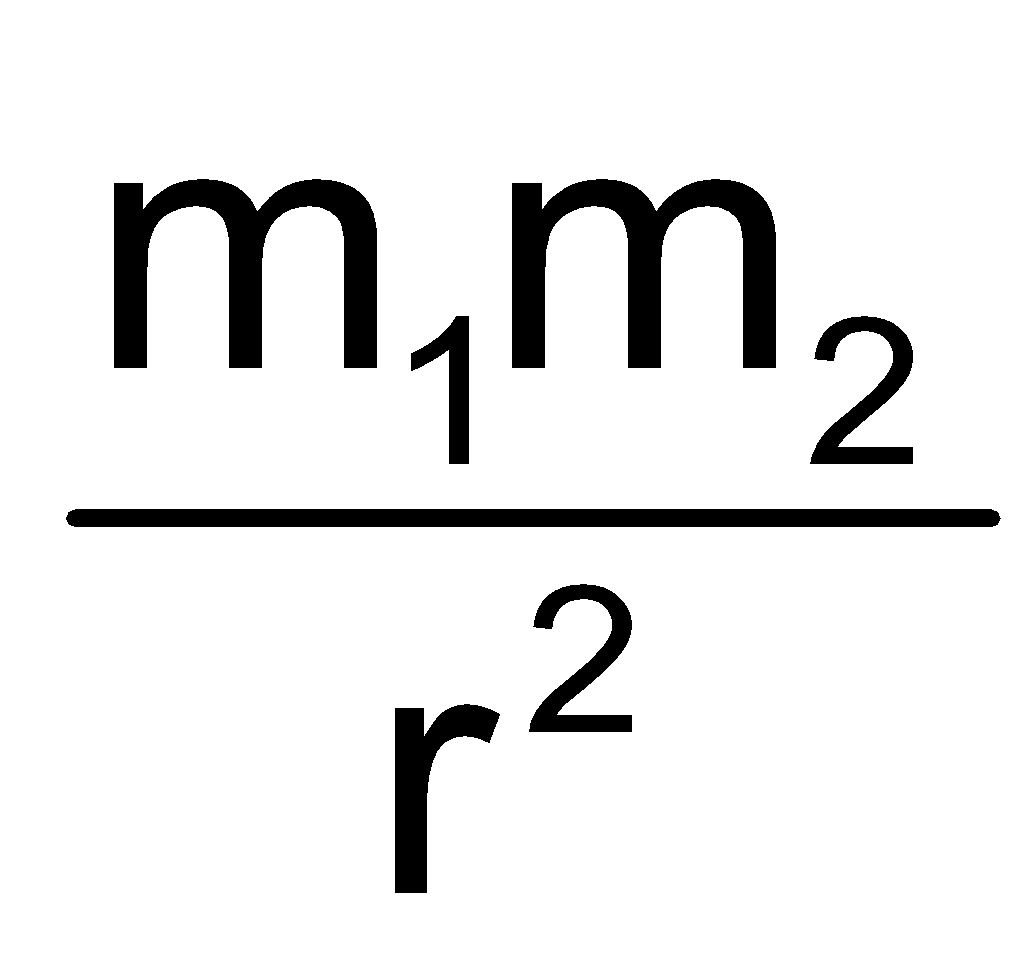
$$ F = G \frac{m \cdot M}{r^2} $$
where G is the gravitational constant, approximately $ 6.674 \times 10^{-11} \ ext{N m}^2/\text{kg}^2 $.
Step 3: Substitute the values into the formula:
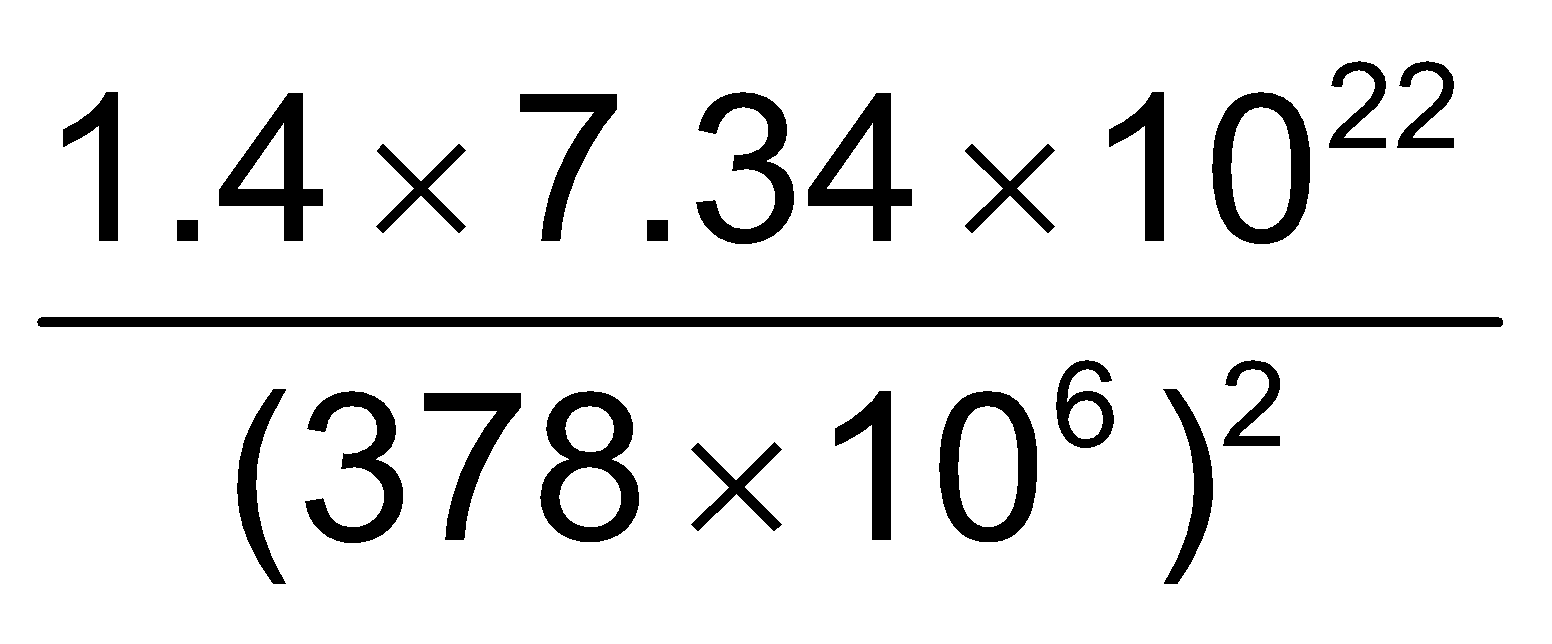
$$ F = 6.674 \times 10^{-11} \frac{1.4 \times 7.34 \times 10^{22}}{(3.78 \times 10^{8})^2} $$
Step 4: Calculate the denominator:
$$ (3.78 \times 10^{8})^2 = 1.42884 \times 10^{17} $$
Step 5: Substitute it back into the equation:
$$ F = 6.674 \times 10^{-11} \frac{1.4 \times 7.34 \times 10^{22}}{1.42884 \times 10^{17}} $$
Step 6: Calculate the numerator:
$$ 1.4 \times 7.34 \times 10^{22} = 10.276 \times 10^{22} \text{ kg m}^2/\text{s}^2 $$
Step 7: Plugging everything into the final equation gives:
$$ F = 6.674 \times 10^{-11} \frac{10.276 \times 10^{22}}{1.42884 \times 10^{17}} \approx 0.469 \text{ N} $$
Therefore, the force exerted by the moon on the brain is approximately 0.469 N, rounded off appropriately. Thus, the full answer is: F \approx 0.47 N.
- Mass of the brain, m = 1.4 kg
- Mass of the moon, M = 7.34 × 10^{22} kg
- Distance, r = 378000 km = 378000 × 10^3 m = 3.78 × 10^{8} m.
Step 2: Use the formula for gravitational force:
$$ F = G \frac{m \cdot M}{r^2} $$
where G is the gravitational constant, approximately $ 6.674 \times 10^{-11} \ ext{N m}^2/\text{kg}^2 $.
Step 3: Substitute the values into the formula:
$$ F = 6.674 \times 10^{-11} \frac{1.4 \times 7.34 \times 10^{22}}{(3.78 \times 10^{8})^2} $$
Step 4: Calculate the denominator:
$$ (3.78 \times 10^{8})^2 = 1.42884 \times 10^{17} $$
Step 5: Substitute it back into the equation:
$$ F = 6.674 \times 10^{-11} \frac{1.4 \times 7.34 \times 10^{22}}{1.42884 \times 10^{17}} $$
Step 6: Calculate the numerator:
$$ 1.4 \times 7.34 \times 10^{22} = 10.276 \times 10^{22} \text{ kg m}^2/\text{s}^2 $$
Step 7: Plugging everything into the final equation gives:
$$ F = 6.674 \times 10^{-11} \frac{10.276 \times 10^{22}}{1.42884 \times 10^{17}} \approx 0.469 \text{ N} $$
Therefore, the force exerted by the moon on the brain is approximately 0.469 N, rounded off appropriately. Thus, the full answer is: F \approx 0.47 N.
Prepare Smarter with CGP Edu
Get practice questions, solutions, and test series in one place.
Write a Review
Share your experience with this question and solution.
Commentary
Send your comment, doubt, correction, or feedback to admin.
Similar Questions
Explore conceptually related problems
The tidal waves in the sea are primarily due to
If there were a smaller gravitational effect, which of the following forces do you think would alte…
A satellite of the earth is revolving in a circular orbit with a uniform speed v . If the gravitati…
The atmosphere is held to the earth by
If the distance between two masses is doubled, the gravitational attraction between them
Which of the following is the evidence to show that there must be a force acting on earth and direc…